Eating Disorders Are Not About What You Look Like
When I talk to people about the work I do (provide therapy for those with eating disorders or who struggle with disordered eating), I often hear, "Oh, so when someone is really skinny or really fat?" Well, no, I have to explain. Weight change is a common symptom of an eating disorder but it doesn't nearly tell the whole story.
Eating disorders seem to be about weight: numbers on the scale, calories in food, exercise intensity, but they're actually about things like coping with stress, dealing with pain, sensory differences and regulating distress.
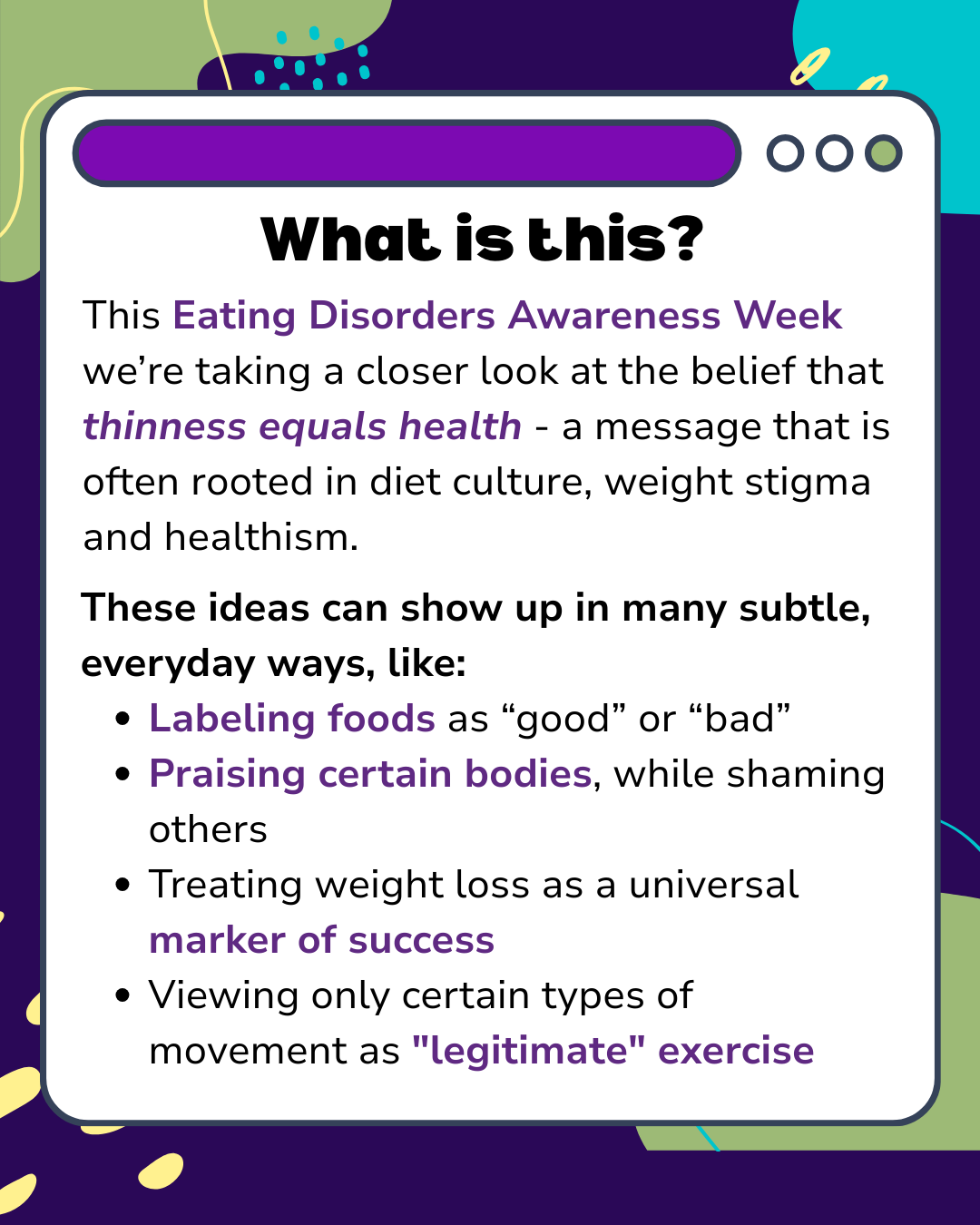
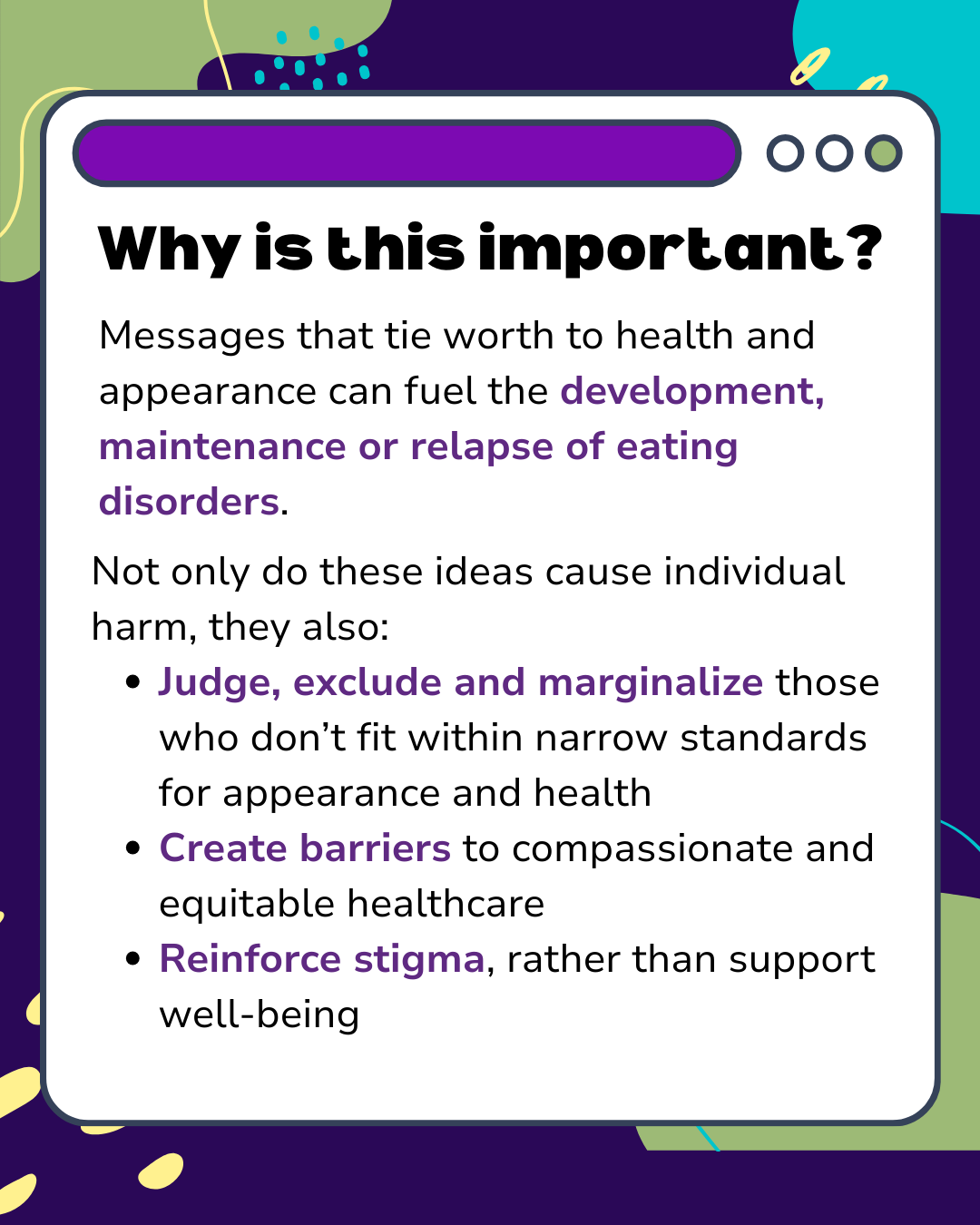
It's Eating Disorders Awareness Week in Canada and this year's theme is "Health doesn't have a look." You can't tell if someone is struggling with disordered eating by what they look like. I have seen those who are struggling immensely at almost every weight and those who are thriving after recovery at almost every weight.
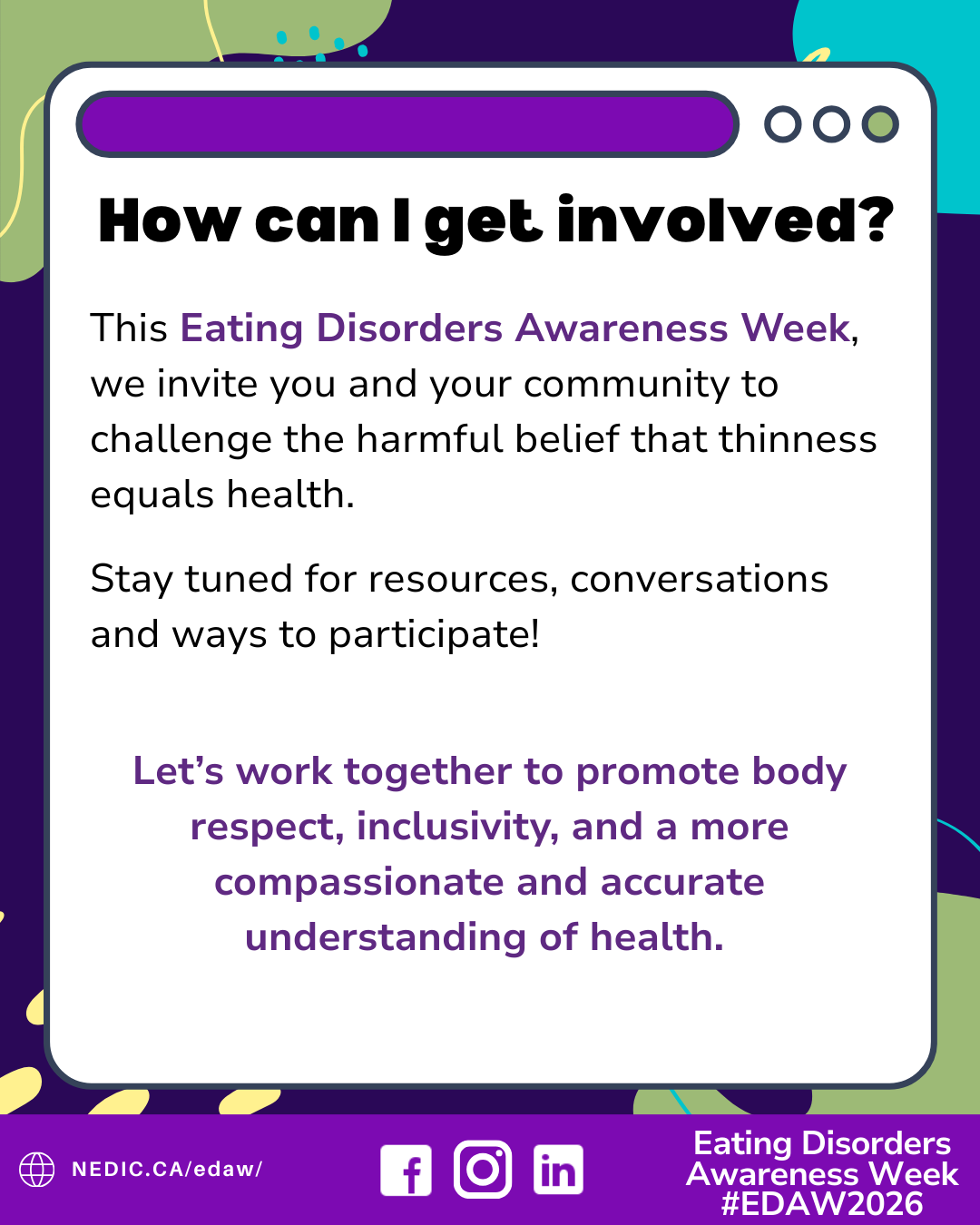
It's time to move past body-based judgements. What's one thing you can do? Instead of commenting on someone's body or what they're eating, ask them how they're doing or what they're looking forward to. This helps shift away from basing people’s worth on their body size or food choices.